Mobility wet rooms in Teesside
A mobility wet room in Teesside costs £4,000 to £8,000 in 2026: level access with no tray lip, anti-slip flooring, a fold-down seat, grab rails and a thermostatic shower. Bath-out conversions are the most common job, planned around keeping a usable toilet every night.
Designed around the person using it
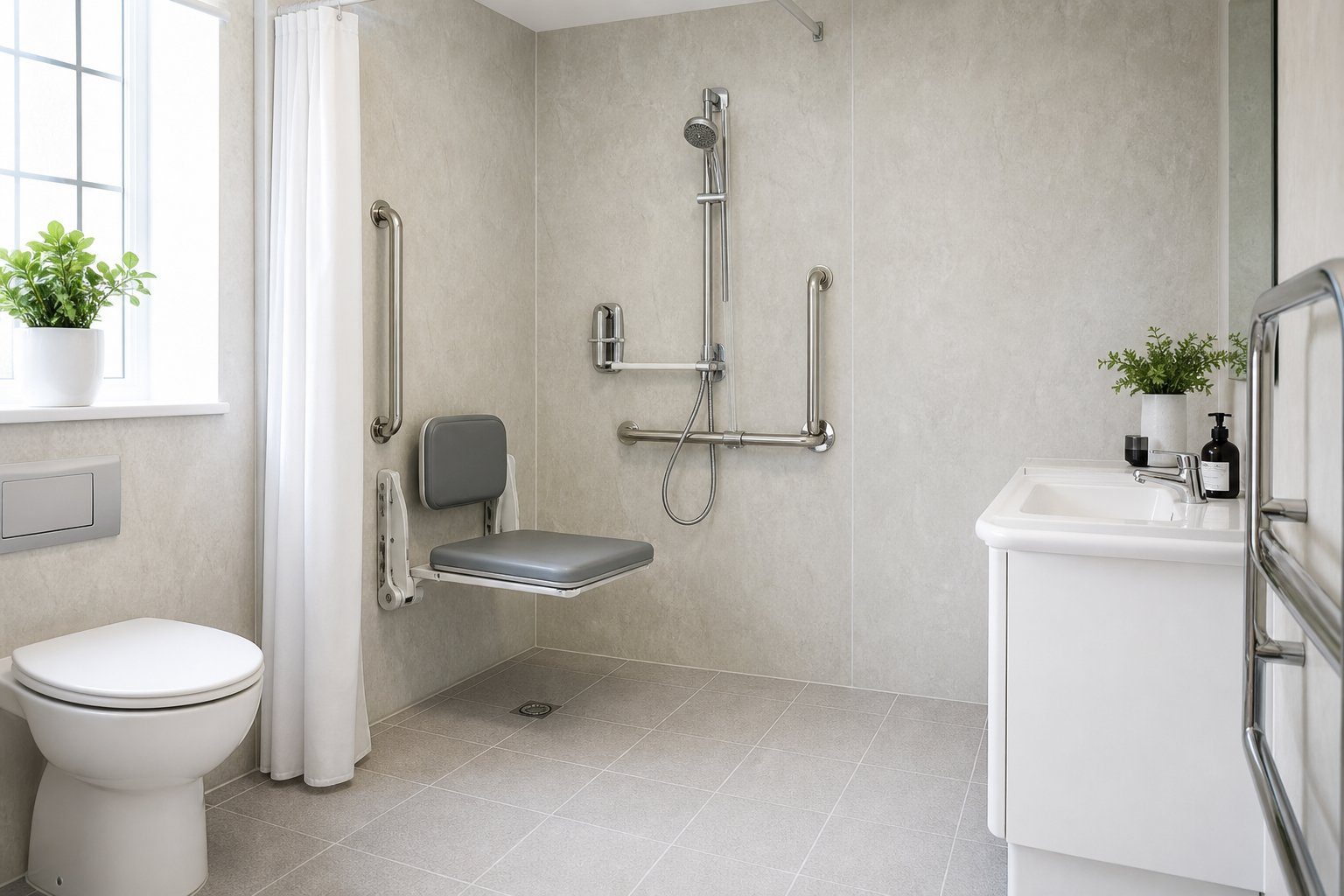
A mobility wet room starts with the user, not the tiles. Level access with no tray lip to step over, an anti-slip floor that grips when wet, a fold-down seat at the right height, grab rails where hands actually reach, and a thermostatic valve that cannot scald. The survey covers how the user moves, transfers and reaches, because those details decide the layout.
The bath-out conversion is the single most common job: the bath someone can no longer climb into comes out, and a level-access showering space goes in. For many Teesside families it is the difference between staying at home and a much harder conversation, and it is planned with real care: the toilet stays usable every night, and the disruption picture is honest and in writing.
What it costs
£4,000 to £8,000 depending on room, drainage route and specification. A straight bath-out conversion with standard anti-slip flooring and a seat sits at the lower end; full room re-formation with premium finishes at the top. Council grants and VAT relief can apply to accessible adaptations: the quote flags where they typically do, though eligibility is always the homeowner's to confirm.
Details that matter more than they look
- Seat height and position: set for the user's transfer, not a catalogue default.
- Grab rails: fixed into structure, positioned where hands reach entering, showering and sitting.
- Anti-slip flooring: rated for wet bare feet, not just a textured tile.
- Thermostatic control: anti-scald as standard, with easy-grip controls.
- Half-height screens or curtains: room for a carer to assist without soaking.
For the comparison with a conventional shower, the wet room vs walk-in shower guide covers it plainly.